
Commercial Solar Energy Systems That Pay for Themselves (And Why Your Business Needs One Now)
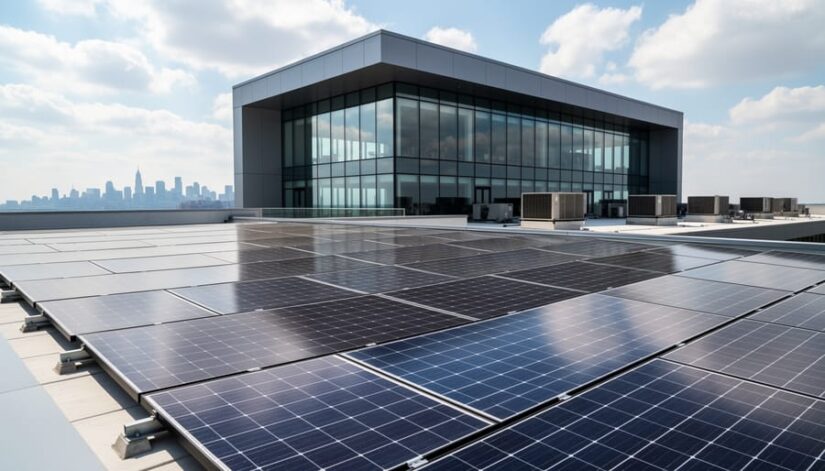
Commercial solar energy systems convert sunlight into electricity for businesses, typically through rooftop or ground-mounted photovoltaic panels connected to your facility’s power grid. These installations range from 25 kilowatts for small offices to multi-megawatt arrays for warehouses and manufacturing plants, with most commercial projects delivering a return on investment within five to eight years through reduced utility bills and available tax incentives.
The decision to go solar represents more than just an equipment purchase. It’s a strategic investment that fundamentally changes how your business pays for electricity. Instead of renting power from the utility month after month, you’re generating your own energy on-site, locking in predictable costs for 25 years or more.
Business owners researching solar today face a markedly different landscape than even five years ago. Equipment costs have dropped substantially, financing options have expanded beyond traditional loans to include power purchase agreements and leases, and the federal Investment Tax Credit continues to make commercial solar financially attractive. At the same time, rising utility rates in many regions have shortened payback periods and improved the economics of self-generation.
What matters most isn’t whether solar works, it’s whether solar works for your specific operation. The answer depends on your roof condition, energy usage patterns, local utility rates, available incentives, and how long you plan to occupy your facility. This guide walks through each factor systematically, providing the framework you need to evaluate solar for your business with confidence.
What Makes Commercial Solar Different from Residential Systems
When you move from your home’s rooftop solar to a commercial installation, you’re not just scaling up the number of panels, you’re entering an entirely different realm of complexity, regulation, and potential.
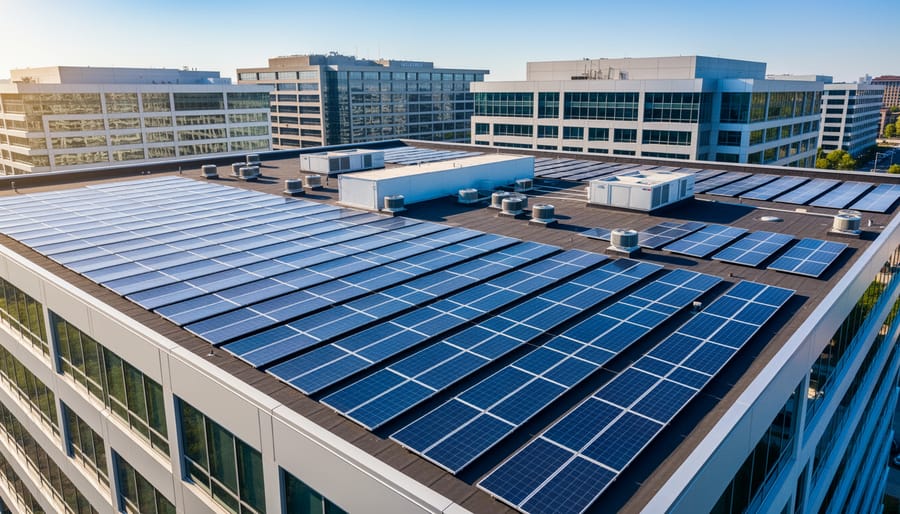
The most obvious difference is sheer size. While residential systems typically range from 5 to 15 kilowatts, commercial installations start around 25 kilowatts and frequently exceed 500 kilowatts for large operations. A warehouse roof might accommodate 200 panels where a house would fit 20. This scale shift means commercial systems must account for structural engineering calculations, three-phase electrical service, and significantly higher voltage requirements that residential electricians aren’t trained to handle.
Energy consumption patterns also diverge sharply. Homes use most electricity in mornings and evenings. Businesses, especially manufacturing, cold storage, or retail operations, draw power heavily during daylight hours when solar production peaks. This alignment makes commercial solar particularly cost-effective, but it requires sophisticated demand analysis and load profiling that goes well beyond a homeowner’s electric bill review.
| Factor | Residential Systems | Commercial Systems |
|---|---|---|
| System Size | 5-15 kW | 25-500+ kW |
| Installation Complexity | Standard rooftop mounts | Engineered structural solutions, ground mounts, carports |
| Typical Payback | 8-12 years | 4-8 years |
| Primary Incentives | Federal tax credit | ITC, accelerated depreciation, state programs |
The regulatory landscape grows exponentially more complex with commercial projects. Beyond standard permit requirements and AHJ reviews commercial installations trigger building code requirements for fire access, fall protection during maintenance, and often environmental assessments if ground-mounted. Utility interconnection agreements become formal negotiations rather than simple paperwork, particularly for systems that might export significant power back to the grid.
Financing structures reflect this complexity. Homeowners typically buy systems outright or take loans. Commercial clients have access to power purchase agreements, operating leases, and tax equity partnerships that require financial modeling and legal review. The upfront capital might range from $50,000 to several million, making the wrong financing choice costly.
This specialized expertise, structural engineering, complex electrical design, commercial finance, and regulatory navigation, is why business owners shouldn’t expect a residential solar company to handle their commercial needs competently. The knowledge gap is substantial, and mistakes at commercial scale carry proportionally larger consequences.
How Commercial Solar Energy Systems Work for Your Business
Types of Commercial Solar Installations
Commercial solar installations come in four main configurations, each suited to different property layouts and business needs. Rooftop systems mount panels directly on your building’s roof, the most common choice for retail stores, warehouses, and offices with structurally sound roofs and minimal shading. They maximize unused space without consuming valuable ground area, though they require roof inspections to verify load capacity before installation.
Ground-mounted arrays install on open land adjacent to your facility, ideal for manufacturing plants, farms, or businesses with excess property. These systems offer flexibility in panel angle and orientation for optimal energy production, plus easier maintenance access than rooftop installations. They’re particularly effective when roof space is limited or unsuitable for solar.
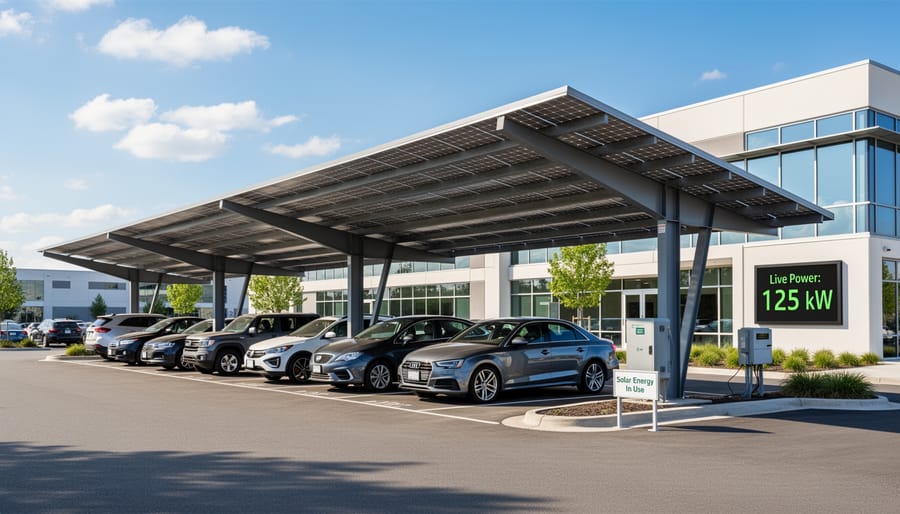
Carport installations transform parking areas into dual-purpose structures that generate electricity while providing shade and weather protection for vehicles. Hotels, shopping centers, and corporate campuses favor this approach because it adds customer value while producing significant power without touching building structures.
Building-integrated photovoltaic (BIPV) systems incorporate solar technology directly into building materials like windows, facades, or roofing tiles. Though typically more expensive upfront, they work well for new construction or businesses prioritizing aesthetics alongside functionality.
Your choice depends on available space, utility grid interconnection requirementshow much power your operations demand, and budget constraints. A qualified installer will assess your property and recommend the configuration that delivers the best energy output and return on investment for your specific situation.
Energy Storage and Battery Backup Options
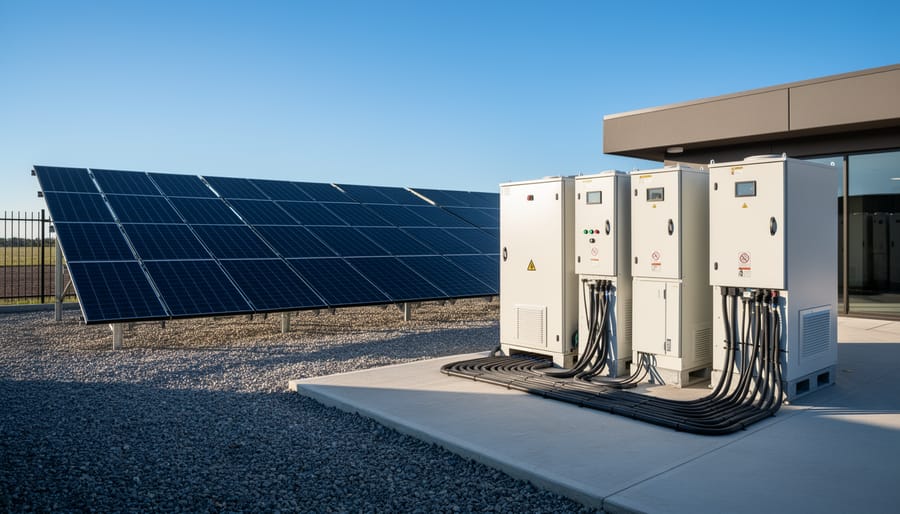
Battery systems transform commercial solar from a daytime-only solution into a 24/7 energy asset. When your panels produce more electricity than your business currently needs, that excess power charges onsite batteries instead of simply feeding back to the grid. You then draw from stored energy during evening hours, overnight operations, or cloudy periods, reducing or eliminating grid purchases when electricity rates typically peak.
For commercial operations, this storage capability delivers two distinct financial benefits. First, batteries provide backup power during grid outages, keeping critical systems online without expensive diesel generators. Manufacturing lines stay operational, refrigeration continues uninterrupted, and retail locations maintain point-of-sale systems. Second, and often more impactful for your bottom line, battery systems enable peak demand management. Most commercial electricity rates include demand charges based on your highest usage spike each month. Batteries can discharge during these peaks, flattening your demand profile and dramatically reducing this expensive rate component, savings that compound month after month.
Modern lithium-ion battery systems designed for commercial use typically last 10-15 years with minimal maintenance. Your solar monitoring system tracks battery performance in real-time, optimizing when to store, when to discharge, and when to draw from the grid based on your rate structure. While batteries add upfront cost, businesses in areas with frequent outages, high demand charges, or time-of-use rates often see battery systems pay for themselves within five to seven years through combined savings.
The True Cost and ROI of Commercial Solar in 2026
Financing Options That Make Solar Accessible
Most businesses want solar but worry about the upfront investment. The good news? You don’t need hundreds of thousands of dollars sitting in a bank account to go solar. Three main financing structures make commercial solar accessible for companies at different stages and with varying financial priorities.
Direct Purchase gives you full ownership from day one. You pay the installation cost upfront (or through conventional business financing), claim the full federal Investment Tax Credit, currently 30% of system cost, and depreciate the asset using MACRS accelerated depreciation. This route delivers the highest lifetime savings because you own all the energy your system produces. It works best for profitable companies with available capital or strong credit who want maximum ROI and the simplest structure.
Solar Leases require little or no money down. You pay a fixed monthly amount to use the system, typically less than your current electricity bill, while the leasing company owns and maintains the equipment. Your costs stay predictable, but the lessor claims the tax benefits. This option suits businesses that want immediate savings without capital expenditure or those that can’t fully utilize tax credits.
Power Purchase Agreements (PPAs) mean you pay nothing for the system itself. Instead, you buy the electricity it generates at a predetermined rate, usually below utility prices. A third party owns, operates, and maintains the system on your property. PPAs work particularly well for nonprofits, municipalities, or businesses without tax liability, since you’re simply buying power, not equipment.
Each structure has different impacts on your balance sheet, cash flow, and long-term savings. The right choice depends on your tax situation, available capital, accounting preferences, and how long you plan to occupy your facility.
Real Savings: What Businesses Are Actually Experiencing
When businesses ask whether commercial solar delivers real value, the answer comes from companies already operating these systems. Sun Power Solutions’ client portfolio demonstrates measurable results across diverse industries, from manufacturing facilities to retail chains.
A regional distribution center in Ohio reduced monthly electricity costs by 68% after installing a 250kW rooftop system in early 2025. Their operations manager reports saving approximately $8,400 monthly, money that previously disappeared into utility bills now funds equipment upgrades and employee training. The system paid for itself in under six years, and with 25-year panel warranties, they’re projecting two decades of near-zero energy expenses.
A manufacturing plant in Pennsylvania saw similar bottom-line savings after switching to solar. Their 400kW ground-mounted array handles peak production demand during daylight hours, when their energy consumption typically spikes. Beyond the financial benefits, the company uses their renewable energy commitment in recruitment materials, younger workers increasingly factor corporate sustainability into employment decisions.
A small retail chain with three locations installed carport solar systems that serve dual purposes. The installations generate 180kW combined while providing covered parking customers appreciate during summer heat and winter storms. The owner notes that beyond cutting electricity costs by half, the visible solar panels have become a marketing asset, reinforcing their brand’s environmental values without saying a word.
A food processing facility integrated battery storage with their solar installation, which proved invaluable during a grid outage last fall. While competitors lost production and inventory, their operation continued seamlessly. The avoided losses from that single incident covered nearly a year of their solar financing payments.
These aren’t promotional claims, they’re documented outcomes from businesses operating commercial solar systems right now, experiencing both immediate cost reductions and long-term financial advantages.
Is Your Business Ready for Commercial Solar?
Not every business is equally positioned to benefit from solar, and understanding your readiness prevents costly missteps. Before moving forward with a commercial solar investment, evaluate these core factors that determine whether your facility makes a strong candidate.
Your Current Energy Consumption
Start by examining your electricity bills from the past twelve months. Businesses with monthly electric costs exceeding $1,500 typically see the strongest returns from solar installations. Higher energy users recover their investment faster because they’re offsetting more expensive grid electricity. Review your usage patterns throughout the day, operations with consistent daytime energy demands align perfectly with energy production from solar panels, maximizing the value of every kilowatt-hour generated.
Available Space and Structural Condition
Commercial solar requires adequate, unobstructed area for panel installation. Assess your roof’s age and condition, systems last 25 to 30 years, so mounting panels on a roof that will need replacement within five years creates unnecessary expense. South-facing roofs deliver optimal performance, though east and west orientations still work well. Ground-mounted arrays offer alternatives if rooftop space is limited or unsuitable. Consider zoning restrictions and property ownership, leased properties require landlord approval and long-term occupancy commitment.
Financial Stability and Planning Horizon
Solar investments make sense for businesses with stable cash flow and multi-year operational plans. Companies facing near-term relocation or uncertain futures should postpone solar decisions. Financial health matters for qualifying for attractive financing terms, and businesses need sufficient tax liability to capture federal tax credits and depreciation benefits.
If these factors align favorably, your business stands ready to benefit from commercial solar. The assessment process with experienced installers reveals specific opportunities and potential challenges unique to your operation.
The Installation Process: What to Expect
Understanding what happens during a commercial solar installation helps you plan effectively and keeps your business running smoothly throughout the process. Most commercial projects take between three and six months from signing to activation, though larger installations may extend longer.
The timeline begins with a detailed site assessment where engineers evaluate your roof structure, electrical infrastructure, and energy consumption patterns. This isn’t a quick walkthrough, expect a thorough examination that includes structural calculations, shading analysis, and electrical system compatibility checks. Your installer will also handle the interconnection application with your utility company during this phase, which alone can take four to eight weeks for approval.
- Initial consultation and site assessment (1-2 weeks): Engineers evaluate your facility, review utility bills, and design a system matching your energy profile.
- Proposal and financing (1-2 weeks): You receive detailed cost projections, ROI calculations, and finalize payment or financing arrangements.
- Engineering and permitting (4-8 weeks): Final designs are completed and submitted to local authorities and your utility for permits and interconnection approval.
- Equipment procurement (2-4 weeks): Panels, inverters, racking, and other components are ordered and delivered to the installation site.
- Installation and construction (2-6 weeks): The physical work happens, roof mounting, electrical runs, inverter installation, and system integration with your building.
- Inspection and approval (1-2 weeks): Local building inspectors and utility representatives verify code compliance and safe operation.
- System activation and monitoring setup (1 week): Your system goes live, monitoring software is configured, and your team receives operational training.
The actual construction phase typically causes minimal disruption to daily operations. Most work happens on your roof or in designated areas away from business activities. However, you’ll experience a brief electrical shutdown, usually just a few hours, when installers connect the solar system to your main electrical panel.
Expect your installation crew to arrive early, work efficiently, and clean up thoroughly each day. They’ll coordinate with your facility manager to address any access requirements or safety protocols specific to your business.
Maintenance and Long-Term Performance
Commercial solar panels are built to last 25 to 30 years with minimal intervention, but understanding what maintenance actually involves helps you protect your investment and maximize returns.
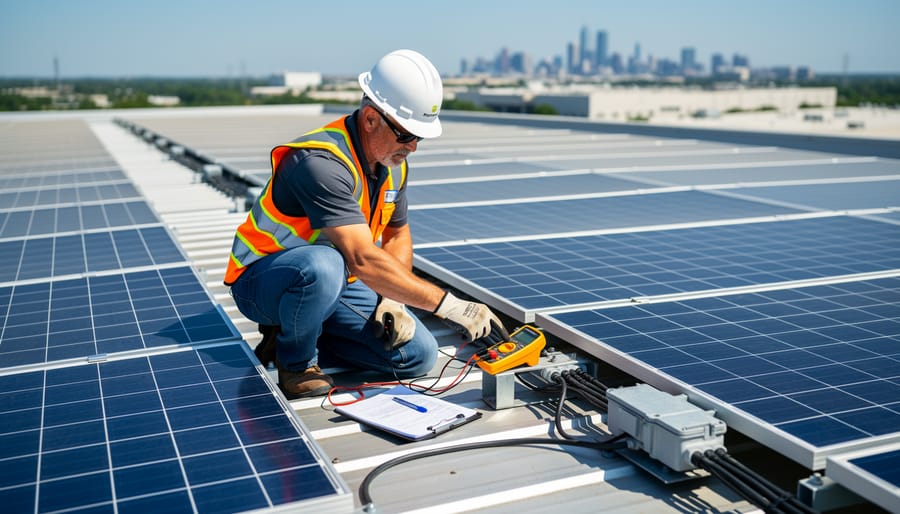
Most commercial systems need surprisingly little hands-on care. Rain naturally cleans panels in areas with regular precipitation, though sites in dusty or industrial environments may benefit from professional cleaning once or twice annually. Sun Power Solutions recommends inspecting mounting hardware, electrical connections, and inverter performance at least once a year. These checkups typically cost a few hundred dollars and catch minor issues before they affect production.
Modern monitoring systems track your array’s output in real time, alerting you immediately if performance drops below expected levels. You can forecast production based on weather and historical data, making anomalies easy to spot. Most problems, a tripped breaker, a single underperforming panel, are simple fixes when caught early.
Warranty coverage provides essential protection. Quality panels typically carry 25-year performance guarantees ensuring at least 80 to 85 percent of original output after two decades. Inverters usually come with 10 to 12-year warranties, often extendable to match panel coverage. Sun Power Solutions includes workmanship warranties covering installation quality for several years, and we remain available throughout your system’s life for service and support.
Battery systems, if included, require monitoring and eventual replacement after 10 to 15 years depending on usage patterns. Factor this into long-term planning.
The key takeaway: commercial solar isn’t maintenance-free, but it’s far less demanding than most business equipment. A modest annual service commitment keeps your system generating maximum savings for decades.
Why Choosing the Right Solar Contractor Matters
The contractor you choose for your commercial solar installation will directly impact your system’s performance, your return on investment, and your experience for the next 25+ years. This isn’t a decision to make based solely on the lowest bid.
Quality commercial solar contractors bring specialized expertise that residential installers simply don’t have. They understand complex electrical configurations, three-phase power systems, demand charge optimization, and the intricate permitting requirements that commercial projects involve. They’ve navigated utility interconnection agreements for large systems and know how to design around your business’s unique load profiles and operational constraints.
Experience matters enormously. A contractor who’s installed hundreds of commercial systems has encountered and solved problems that newer providers haven’t even imagined yet. They know how to handle difficult roof conditions, integrate with existing building management systems, and coordinate installations that minimize disruption to your business operations. Sun Power Solutions has served over 60,000 customers, building a depth of knowledge that translates directly into smoother projects and better outcomes for your business.
Certification tells you a contractor meets industry standards. Look for NABCEP (North American Board of Certified Energy Practitioners) certification and proper state licensing. Check their insurance coverage, commercial projects require higher liability limits than residential work.
References from similar businesses provide the clearest picture of what you can expect. Don’t just ask for a list; call those references and ask specific questions about communication, timeline accuracy, problem resolution, and post-installation support. A contractor confident in their work will gladly connect you with past clients.
The cheapest bid often signals corners being cut, inferior equipment, inexperienced installers, or unrealistic project plans that lead to change orders later. Focus on value: the combination of quality equipment, expert installation, comprehensive warranties, and reliable long-term support that protects your investment and maximizes your savings.
Commercial solar energy systems represent one of the smartest investments your business can make in 2026. The financial case is compelling: reduced energy costs, substantial tax incentives, accelerated depreciation, and systems that typically pay for themselves within five to seven years while generating free electricity for decades after. But the benefits extend beyond your bottom line.
By transitioning to solar, you’re insulating your business from unpredictable utility rate increases, demonstrating environmental leadership to customers who increasingly care about sustainability, and contributing to cleaner air in your community. You’re also positioning your company for a future where renewable energy isn’t optional but expected.
The question isn’t whether commercial solar makes sense, it’s whether your business is ready to start benefiting from it. Every month you wait is another month of energy costs that could have been savings.
Sun Power Solutions has helped over 60,000 customers make this transition successfully. Our team can assess your facility, explain your options without pressure, and show you exactly what solar would mean for your specific operation. The consultation costs nothing, but the insights you’ll gain about your energy future are invaluable.
Your business deserves energy independence. Let’s explore what that looks like together.
