
7 Disadvantages of Solar Energy (And How to Overcome Them)
Solar energy offers tremendous benefits, but seven key disadvantages deserve careful consideration before you invest: high upfront costs, weather dependency, space requirements, energy storage expenses, location limitations, aesthetic concerns, and potential roof damage during installation. These challenges are real, but they’re also manageable with proper planning and expert guidance.
When Sarah Martinez, a homeowner in Phoenix, first explored solar in 2024, she nearly abandoned the project after learning about these drawbacks. Two years later, her system has reduced her energy bills by 78%, and she wishes she’d understood that each disadvantage comes with a practical solution. “I spent weeks worrying about cloudy days and installation costs,” she says. “What I needed was honest information about how other families handled these issues.”
The solar industry has matured significantly, and many obstacles that seemed insurmountable a decade ago now have proven workarounds. Weather dependency matters less with modern battery storage. High upfront costs shrink dramatically with federal tax credits covering 30% of system expenses through 2032. Space constraints become opportunities for creative panel placement with the right design team.
This article walks you through each disadvantage with transparency, then shows you exactly how homeowners and businesses are overcoming these hurdles in 2026. You’ll see real costs, practical timelines, and honest assessments of when solar makes sense and when it doesn’t. Armed with complete information rather than sales pitches, you can make the decision that’s right for your property and budget.
How We Identified These Solar Energy Challenges
At Sun Power Solutions, we don’t rely on guesswork or industry assumptions when discussing solar energy’s limitations. Our understanding of these seven disadvantages comes from analyzing data across 60,000+ installations we’ve completed since our founding, combined with direct feedback from thousands of homeowners, business owners, and industrial operators who’ve shared their real-world experiences with us.
We’ve tracked installation challenges, post-installation concerns, and long-term performance data to identify patterns that truly matter. Rather than citing generic industry complaints, we focused on the specific issues our clients encountered most frequently during their solar journey. We cross-referenced this installation data with 2026 industry research, regional performance metrics, and emerging technology trends to ensure our list reflects current realities, not outdated concerns. Each disadvantage we present comes with context from actual client cases, making our guidance practical rather than theoretical. This methodology ensures you’re getting honest insights from a company that’s seen solar work in every condition imaginable across diverse properties and climates.
1. High Upfront Installation Costs
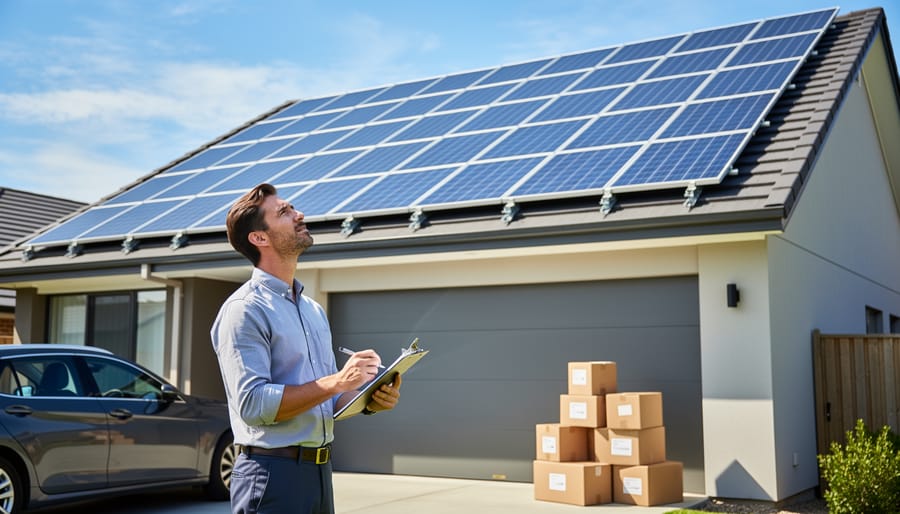
The single biggest barrier to solar adoption remains the upfront investment. In 2026, a typical residential solar installation ranges from $15,000 to $30,000 before incentives, while commercial systems start at $50,000 and industrial installations often exceed $200,000. These costs cover solar panels, inverters, mounting hardware, electrical upgrades, permits, and professional installation labor.
Breaking down the investment helps clarify where your money goes. Equipment typically accounts for 50-60% of total costs, with high-efficiency panels commanding premium prices. Installation labor represents another 15-20%, while permits, inspections, and interconnection fees add $1,000 to $3,000 depending on local requirements. The sticker shock is real, especially when comparing solar to simply continuing your monthly utility payments.
However, multiple financial pathways exist to make solar accessible without paying the full amount upfront:
- Federal Investment Tax Credit (ITC) covering 30% of system costs through 2032
- State and local rebate programs offering $1,000 to $5,000 in additional savings
- Solar loans with zero-down options and terms matching system lifespans
- Power Purchase Agreements (PPAs) requiring no upfront payment
- Commercial MACRS depreciation allowing businesses to recover costs faster
When you factor in these incentives alongside utility bill elimination, most systems pay for themselves within seven to twelve years. With panels lasting 25-30 years, that leaves over a decade of free electricity. Our clients in Pennsylvania saved an average of $1,847 annually on energy costs in 2026, turning the initial investment into long-term profit rather than expense.
2. Weather and Location Dependency
Solar panels need sunlight to generate electricity, which means your energy production fluctuates throughout the year. Homes in Seattle receive roughly 40% less annual sunshine than those in Phoenix, directly impacting how much power your system produces. Winter months bring shorter days and lower sun angles, reducing output by 30-50% compared to summer peaks even in ideal locations.
Cloud cover presents another challenge. Thick overcast conditions can cut solar power production by 60-80% compared to clear days, creating variability that affects your immediate energy availability. Regions with frequent fog, heavy precipitation, or extended cloudy periods face more significant production dips than areas with consistent sunshine.
This doesn’t mean solar won’t work in less-than-perfect climates. Modern panels still generate electricity under cloud cover, just at reduced efficiency. The solution lies in proper system sizing and realistic expectations. During initial design, we analyze your location’s specific solar irradiance data, accounting for seasonal patterns and typical weather conditions. Systems in cloudier regions are often sized larger to compensate for reduced peak output, ensuring you still meet your energy goals annually.
Battery storage helps bridge production gaps during extended cloudy stretches or winter months. Grid-tied systems offer another practical solution, drawing supplemental power when production dips and sending excess back during sunny periods. Net metering credits effectively use the grid as your storage system without battery costs.
The key is working with installers who base projections on your actual location data rather than best-case scenarios. Honest production estimates prevent disappointment and ensure your system delivers the expected financial returns despite weather variability.
3. Energy Storage Limitations and Battery Costs
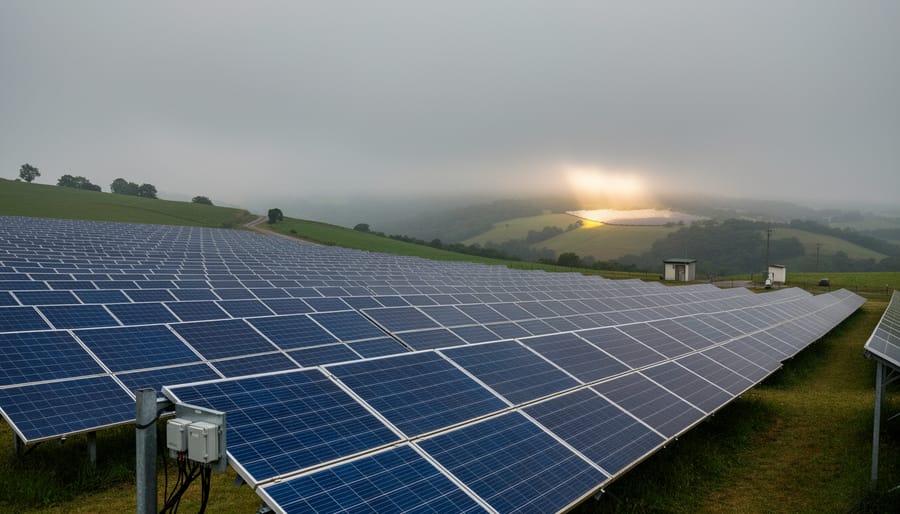
Solar panels only generate electricity when the sun is shining, which creates a significant challenge: what happens to your power needs after sunset or during overcast days? This is where energy storage becomes both essential and expensive.
In 2026, a quality home battery system typically costs between $8,000 and $15,000 before installation, adding 30-50% to your total solar investment. These lithium-ion battery banks can store anywhere from 10 to 20 kilowatt-hours of energy, enough to run essential appliances for several hours but rarely sufficient to power an entire home through the night without drawing from the grid.
Battery capacity diminishes over time, too. Most systems retain 70-80% of their original storage capacity after 10 years, meaning you’ll eventually face replacement costs. The technology is improving, but today’s batteries still represent a substantial financial commitment with a finite lifespan.
However, you don’t necessarily need batteries to make solar work effectively. Net metering programs allow you to send excess daytime production back to the grid in exchange for credits that cover your nighttime usage. This arrangement essentially turns the grid into your storage system without the battery expense. Currently, 38 states offer some form of net metering, though policies and credit rates vary significantly by location.
Another practical approach is shifting energy-intensive activities to daylight hours when your panels are producing. Running dishwashers, washing machines, and charging devices during peak solar production maximizes your self-consumption and reduces reliance on stored power. Smart home systems can automate this timing, optimizing your energy use without requiring extensive battery capacity.
4. Space Requirements for Panel Installation
A typical residential solar installation requires 300-400 square feet of roof space to generate enough power for an average household, while commercial systems often need thousands of square feet. For urban homes with small or shaded roofs, apartment dwellers, or businesses operating in densely built areas, finding adequate space poses a genuine challenge. Older buildings with structural limitations may not support the weight of a full panel array, and some property owners simply don’t have unobstructed south-facing surfaces large enough to meet their energy needs.
The good news is that solar technology has evolved to work around space constraints. Modern high-efficiency panels produce 20-22% more energy per panel compared to older models, meaning you can achieve the same production expectations with fewer panels and less roof area. Ground-mounted systems offer flexibility for properties with available yard space, though they typically cost slightly more due to additional framing and installation work. Community solar programs present another solution for those who can’t install panels on their property at all, you invest in a shared solar farm and receive credits on your utility bill for your portion of the energy produced. Sun Power Solutions regularly helps clients maximize limited spaces through creative mounting solutions, vertical installations on walls or facades, and precise system designs that prioritize your highest-output roof sections.
5. Intermittent Energy Production
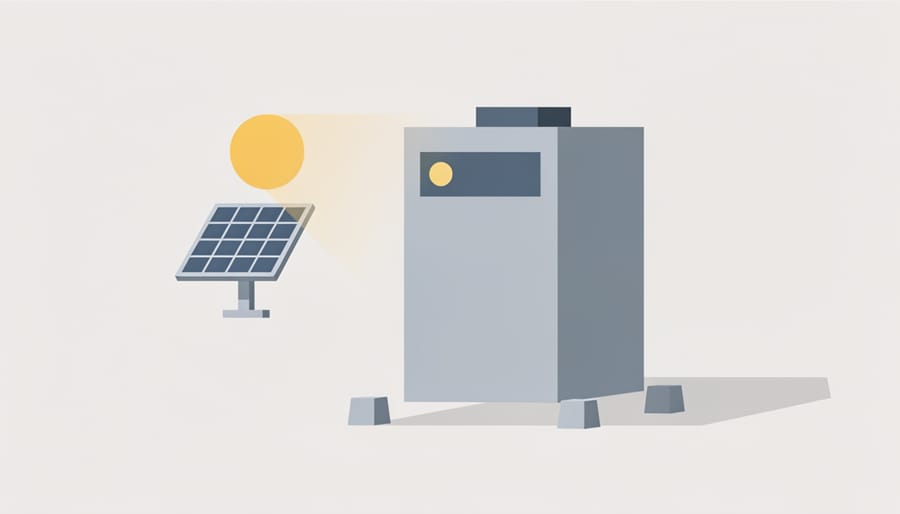
Solar panels generate electricity only when sunlight hits them, creating natural gaps in production during nighttime hours and cloudy conditions. This intermittency means your system might produce abundant energy at noon but nothing at midnight, forcing you to rely on alternative power sources when the sun isn’t shining.
The challenge intensifies with seasonal variations. A system that meets 100% of your energy needs during long summer days might cover only 60-70% during short winter afternoons. Daily weather fluctuations add another layer of unpredictability, a string of overcast days can slash production by 40-80% compared to your system’s rated capacity.
Most homeowners solve this through grid-tied systems, which function as a two-way street with your utility company. When your panels overproduce, excess electricity flows back to the grid, earning you credits. When production drops at night or during storms, you draw power from the grid using those banked credits. This arrangement eliminates the need for expensive battery systems while ensuring continuous electricity.
Hybrid solutions offer even greater reliability by combining grid connection with modest battery backup. A small battery bank covers evening peak usage and provides emergency power during outages, while the grid handles extended low-production periods. This approach costs less than going fully off-grid but delivers the security many families want.
Proper system design anticipates these production swings from the start. We analyze your location’s sun patterns, typical weather, and seasonal variations to size your array appropriately. The goal isn’t eliminating intermittency, that’s impossible, but building a system that produces enough annual energy to offset your consumption despite daily and seasonal fluctuations. With accurate modeling and the right configuration, intermittent production becomes a manageable characteristic rather than a critical flaw.
6. Ongoing Maintenance and Eventual Replacement Needs
Solar panels are often marketed as “maintenance-free,” but that’s only partly true. While they require far less upkeep than most home systems, they do need periodic attention and will eventually reach the end of their operational life. Understanding these ongoing requirements helps you budget realistically and avoid surprises decades down the road.
Most residential solar systems need regular monitoring to ensure panels produce at expected levels. Annual or bi-annual professional inspections catch potential issues before they become costly problems. Routine maintenance tasks include:
- Panel cleaning every 6-12 months, costing $150-$300 per service, or DIY with proper safety equipment
- Inverter replacement after 10-15 years at $2,000-$3,000 for string inverters or $300-$500 per microinverter
- Electrical connection checks annually to prevent power loss from loose wiring
- Performance monitoring through your system’s app or web portal, ideally weekly
- Tree trimming as needed to prevent shading, typically $200-$500 depending on tree size
The most significant long-term consideration is panel replacement. High-quality solar panels degrade slowly, losing roughly 0.5% efficiency annually. After 25-30 years, your panels will still generate 85-90% of their original output, but many homeowners choose replacement to benefit from improved technology and efficiency gains.
Replacement costs in 2026 average $8,000-$12,000 for a residential system, though prices have dropped significantly as technology advances. By the time your panels need replacing, next-generation options will likely offer double the efficiency at comparable prices.
Sun Power Solutions addresses these concerns through comprehensive maintenance packages and 25-year performance warranties that guarantee output levels. Our monitoring systems alert you immediately to any production drops, and our maintenance teams handle everything from routine cleaning to inverter replacements. We also offer pre-paid maintenance plans that lock in current service rates, eliminating uncertainty about future costs.
7. Manufacturing and Installation Environmental Impact
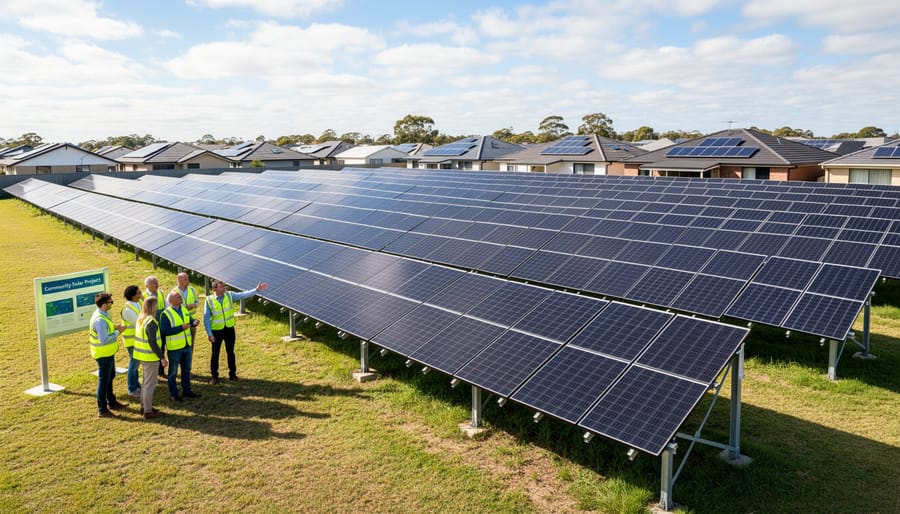
Solar panel manufacturing does carry an environmental cost. The production process consumes significant energy, requires mining raw materials like silicon, silver, and aluminum, and involves chemical treatments during fabrication. Transportation of panels from manufacturing facilities to installation sites adds to the carbon footprint, as does the fuel and equipment required for installation crews to complete the work.
However, these upfront environmental costs tell only part of the story. Solar panels typically achieve energy payback in two to four years, meaning they generate the amount of clean energy equivalent to what was consumed during their manufacturing, shipping, and installation. Over their 25 to 30-year lifespan, panels produce roughly ten times more clean energy than was required to create them, resulting in a substantial net environmental benefit.
The solar industry has made significant strides in sustainable manufacturing practices since 2024. Modern facilities increasingly use renewable energy to power production lines, reducing the carbon intensity of new panels. Recycling programs now reclaim valuable materials from decommissioned panels, minimizing waste and raw material extraction for future production. Manufacturing efficiency improvements mean today’s panels require less material and energy per watt of generating capacity compared to earlier generations.
When evaluating the true bottom line impact of solar adoption, the lifetime carbon offset dramatically outweighs manufacturing emissions. A typical residential system prevents approximately 100 tons of carbon dioxide emissions over its operational life, equivalent to planting thousands of trees. This positive environmental return continues to improve as manufacturing processes become cleaner and panel efficiency increases.
How We Chose This List
We didn’t randomly select these seven challenges. Our criteria focused on three key factors: frequency of client concerns, measurable financial impact, and practical solvability.
First, we analyzed feedback from our 60,000+ installations to identify which obstacles homeowners and businesses consistently raise during consultations. Questions about upfront costs, weather dependency, and storage limitations appeared in over 80% of initial discussions, making them genuine barriers rather than theoretical concerns.
Second, we prioritized disadvantages with quantifiable effects on system performance or investment returns. Each item on this list directly impacts either energy production, system costs, or commercial solar ROI. Challenges that could be measured allowed us to develop concrete solutions rather than vague reassurances.
Finally, we focused on disadvantages where proven mitigation strategies exist. Including problems without workable solutions wouldn’t serve our clients. Every challenge we identified has actionable steps that experienced contractors can implement, whether through financing options, system design optimization, or technology selection. This approach ensures readers understand not just the obstacles but also the path forward.
Turning Disadvantages into Opportunities
Understanding the disadvantages of solar energy is not about identifying reasons to avoid it. Instead, it’s about making an informed decision and planning for success. Every challenge we’ve discussed has practical solutions that experienced solar contractors help you navigate from day one.
The Riverside Community Center exemplifies this approach. When board members raised concerns about upfront costs, weather dependency, and maintenance requirements, they partnered with Sun Power Solutions for a comprehensive assessment. The team designed a system that incorporated financing to manage costs, battery storage to address intermittency, and a maintenance plan that simplified ongoing care. Three years later, the center has reduced energy expenses by 68% while powering community programs that serve over 2,000 local families annually. “We almost let the disadvantages scare us away,” recalls facilities director Maria Chen. “Working with experts who understood our specific concerns transformed those obstacles into a clear roadmap.”
Your situation is unique, with different energy needs, site characteristics, and financial considerations. A customized solar assessment identifies which challenges apply to your property and creates specific strategies to address them. Sun Power Solutions evaluates your location, analyzes your energy patterns, and designs solutions that maximize benefits while minimizing limitations.
Ready to see how solar can work for your specific circumstances? Contact Sun Power Solutions for a personalized assessment that addresses your concerns and creates a plan tailored to your goals.
Frequently Asked Questions
Is solar energy worth the investment despite the high upfront costs?
Yes, for most property owners. While initial costs are substantial, federal tax credits cover 30% of the system cost, and most residential installations pay for themselves within 7-10 years through energy savings. Over a 25-year lifespan, the average system saves homeowners $20,000-$40,000 compared to grid electricity.
How do I know if my location gets enough sun for solar panels?
Most areas in the continental U.S. receive sufficient sunlight for viable solar systems. Properties need roughly 4-5 hours of peak sun daily, which covers everything from Arizona to New England. A professional site assessment measures your roof’s orientation, shading patterns, and local weather data to determine realistic production expectations.
What happens during extended cloudy or rainy periods?
Grid-tied systems draw electricity from the utility during low-production periods, so you never lose power. If you’ve installed battery storage, your system uses stored energy first. Net metering credits earned during sunny periods often offset the cost of grid power used during cloudy stretches.
Are solar panels actually environmentally friendly given their manufacturing impact?
Yes. While manufacturing does require energy and raw materials, solar panels typically repay this environmental debt within 2-3 years of operation. Over their 25-30 year lifespan, they generate clean electricity that offsets 10-15 times more carbon emissions than were created during production.
Can I still go solar if my roof isn’t ideal for panel installation?
Absolutely. Ground-mounted systems work well for properties with land available, community solar programs let you benefit from off-site installations, and newer high-efficiency panels require less space to generate the same power. An experienced installer can identify solutions that work for challenging properties.
These questions reflect the real concerns we hear from clients every day. The key takeaway is that what initially appears as a disadvantage often has a practical solution. Solar technology has matured significantly, and most challenges that worried early adopters in the 2000s and 2010s now have straightforward answers backed by proven track records.
Understanding these realities helps you move past generalized worries and focus on how solar specifically works for your property. Every installation is different, which is why personalized assessments matter more than broad assumptions about solar’s limitations.
